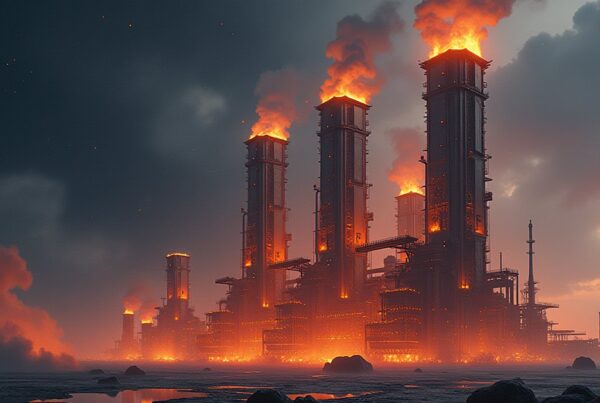
Parsteel Generators produce Parsteel, the alloy that pays for most of your station’s buildings. Star Trek Fleet Befehl gives you eight of them, lettered A through H. They are the same building repeated: at any given level, every generator produces and stores the same amounts. The only real difference is when you can place each one, from Generator A at Operations level 1 to G and H at Operations 50. From level 61 a generator switches to producing Σ-Parsteel, the late-game version of the resource. Build each one the moment it unlocks and let them run.
When each Parsteel Generator unlocks
Every generator upgrades to level 80. The unlock gate is your Operations level, and the later letters also ask for an earlier generator to exist first.
| Variant | Schaltet frei ab | Max level |
|---|---|---|
| Parsteel Generator A | Operations 1 | 80 |
| Parsteel Generator B | Operations 2, Parsteel Generator A 1 | 80 |
| Parsteel Generator C | Operations 8, Parsteel Generator A 7 | 80 |
| Parsteel Generator D | Operations 22, Parsteel Generator B 1 | 80 |
| Parsteel Generator E | Operations 32, Parsteel Generator C 1 | 80 |
| Parsteel Generator F | Operations 42, Parsteel Generator D 1 | 80 |
| Parsteel Generator G | Operations 50, Parsteel Generator E 1 | 80 |
| Parsteel Generator H | Operations 50, Parsteel Generator F 1 | 80 |
- Parsteel Generator A unlocks at Operations level 1 and upgrades to level 80.
- Parsteel Generator B unlocks at Operations level 2, once Generator A is built.
- Parsteel Generator C unlocks at Operations level 8 and needs Generator A at level 7.
- Parsteel Generator D unlocks at Operations level 22, once Generator B is built.
- Parsteel Generator E unlocks at Operations level 32, once Generator C is built.
- Parsteel Generator F unlocks at Operations level 42, once Generator D is built.
- Parsteel Generator G unlocks at Operations level 50, once Generator E is built.
- Parsteel Generator H unlocks at Operations level 50, once Generator F is built.
What Parsteel Generators do
Each generator produces Parsteel every hour and holds what it makes until you collect it. Production starts at 90 Parsteel per hour at level 1 and scales hard: 1,200 per hour at level 10, 23,000 at level 20, 300,000 at level 30, 10 million at level 40, 36 million at level 50, and 140 million at level 60. Storage grows alongside it, from 45 Parsteel held at level 1 to 6.3 billion at level 60. Those numbers are per generator, so eight of them running at the same level multiply your idle income by eight.
From level 61 the building changes jobs. The base Parsteel figures end there in the current game data, and the generator produces and stores Σ-Parsteel instead: 10 per hour when the switch happens at level 61, rising to 14,000 per hour at level 80, with Σ-Parsteel storage growing from 300 to 343,050. Σ-Parsteel is the currency your highest-level station upgrades demand, which is why these late generator levels matter far more than their small-looking output suggests.
Costs mirror the output curve. Through the 30s a generator upgrade asks only for Tritanium and Dilithium, which your other resource buildings supply. From level 40 the bills start including refined ore, and later refined gas, which come out of the Raffinerie. That’s worth knowing before you queue a big generator push: the limiting resource late in the curve is usually Raffinerie output, not raw Tritanium.
Generators A and B carry one extra effect the others lack: a Hull Health Bonus for all your ships that unlocks at Syndikat level 30. It scales with the building’s level, from 1% at level 1 to 1,000% at level 80, so once your Syndicate is that far along, those two generators quietly become combat Gebäude too.
Upgrade-Kosten und Bauzeiten
The table below shows milestone levels for Parsteel Generator A. The other letters follow the same curve, though exact costs vary slightly by variant at some levels. Every upgrade is gated by Operations at the matching level, and times are base values before any speedups or cost reductions.
| Ebene | Kosten | Build time | Requires |
|---|---|---|---|
| 1 | 10 Parsteel | 15s | Operations 1 |
| 10 | 2,800 Parsteel, 75 Tritanium | 16m | Operations 10 |
| 20 | 2,125 Tritanium, 2,125 Dilithium | 4h 38m | Operations 20 |
| 30 | 195,000 Tritanium, 195,000 Dilithium | 11h 48m | Operations 30 |
| 40 | 15.05M Tritanium, 15.05M Dilithium, 2,500 4★ Gemeinsame Raffiniertes Erz | 8d 2h | Operations 40 |
| 50 | 918.8M Tritanium, 918.8M Dilithium | 138d 8h | Operations 50 |
| 60 | 123.1B Tritanium, 123.1B Dilithium, 129,500 5★ Common Refined Ore, 27,300 5★ Ungewöhnlich Raffiniertes Erz | 291d 11h | Operations 60 |
| 70 | 396,625 Σ-Tritanium, 396,625 Σ-Dilithium, 469,800 6★ Common Refined Gas, 108,000 6★ Uncommon Refined Ore | 76d 21h | Operations 70 |
| 80 | 48.41M Σ-Tritanium, 48.41M Σ-Dilithium, 6.714M 7★ Common Refined Gas, 984,860 7★ Uncommon Refined Erze | 1,855d 18h | Operations 80 |
Taking one generator from level 1 to 80 costs about 493.1 billion Tritanium and 493.1 billion Dilithium, plus escalating amounts of refined ore and gas and roughly 163 million each of Σ-Tritanium and Σ-Dilithium at the top end. The cumulative base build time is about 10,457 days, which is why construction speedups and building cost efficiencies exist. These figures are current as of the latest game data.
Parsteel Generators upgrade missions
Several Parsteel Generators upgrades come with a mission attached: the mission completes when the upgrade finishes, and pays the reward listed. These are the ones without a separate guide.
| Mission | Objective | Belohnungen |
|---|---|---|
| Construct Parsteel Generator C | Complete the construction | 100,000 Tritanium |
| Aufrüstung des Parsteel-Generators A auf Stufe 2 | Schließe das Upgrade ab | 5 Tritanium |
| Aufrüstung des Parsteel-Generators B auf Stufe 2 | Schließe das Upgrade ab | 15 Tritanium |
| Aufrüstung des Parsteel-Generators B auf Stufe 4 | Schließe das Upgrade ab | 35 Tritanium |
| Aufrüstung des Parsteel-Generators A auf Stufe 5 | Schließe das Upgrade ab | 60 Tritanium, 1 1 Minute Repair Speed Up |
| Aufrüstung des Parsteel-Generators B auf Stufe 5 | Schließe das Upgrade ab | 60 Tritanium, 1 1 Minute Repair Speed Up |
| Upgrade Parsteel Generator C to Level 5 | Schließe das Upgrade ab | 280 Tritanium, 3 1 Minute Repair Speed Up |
| Upgrade Parsteel Generator A: Level 7 | Schließe das Upgrade ab | 1,200 Tritanium |
| Upgrade Parsteel Generator B: Level 7 | Schließe das Upgrade ab | 1.600 Tritan |
| Upgrade Parsteel Generator C: Level 7 | Schließe das Upgrade ab | 100,000 Tritanium |
| Upgrade Parsteel Generator A, B, C: Level 8 | Schließe das Upgrade ab | 100,000 Tritanium |
| Upgrade Parsteel Generator A to Level 21 | Schließe das Upgrade ab | 21,700 Tritanium, 2 10 Minute Repair Speed Up |
| Upgrade Parsteel Generator E to Level 33 | Schließe das Upgrade ab | 1,000,000 Tritanium, 2 1 Hour Repair Speed Up |
Other Parsteel Generators upgrade missions have their own guides: Parsteel Generator B konstruieren, Aufrüstung des Parsteel-Generators A auf Stufe 3, Aufrüstung des Parsteel-Generators A auf Stufe 4.
How Parsteel Generators fit your station
The unlock pacing tells you the plan. You get two generators almost immediately, a third at Operations 8, then one more roughly every ten Operations levels until all eight are running by Operations 50. Place each one as soon as it appears; the early levels cost pocket change and finish in minutes. Note the chain requirements in the unlock table: D through H each need one of the earlier generators standing first, so skipping a letter isn’t an option even if you wanted to.
In your first weeks, Generators A and B are a real share of your income, and keeping them at your Operations level is one of the cheapest upgrades you can make. Their build times are short enough to slot between bigger projects without ever blocking the queue.
Because a generator only holds so much, collect regularly. Storage caps grow with level, but an afternoon away is enough to fill a low-level generator, and Parsteel sitting in the building isn’t paying for upgrades. Upgrading generators is background work: queue them when your builder would otherwise sit idle, and prioritize the letters you already own over waiting for the next unlock.
Past level 60, the calculus changes. The switch to Σ-Parsteel makes generator levels a direct input to your endgame station progress, since top-tier building upgrades bill in Σ-Ressourcen. At that stage the generators stop being a convenience and become part of the critical path.
Are Parsteel Generators worth upgrading?
Yes, with sensible timing. Early on they are cheap, fast, and the backbone of your Parsteel income, so keep all of them close to your Operations level. In the mid game their output trails what active play brings in, and it’s fine to let them lag behind priority buildings while your builder handles the Shipyard, Drydocks, and research gates. From level 61 onward they earn their keep again as your Σ-Parsteel supply, and generators A and B add a Syndicate-gated hull bonus on top of the economy. Eight small buildings, one steady payoff, and no point in the game where tearing your eyes off them entirely is the right call.